استشاري جراحات المياه البيضاء وتصحيح الابصار وعلاج جفاف العيون
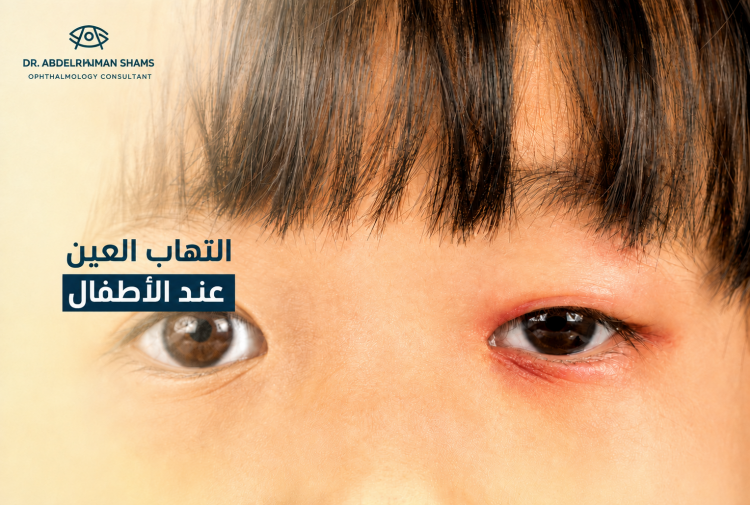
Eye inflammation in children is a common ocular presentation that can affect individuals across all age groups. It clinically manifests as conjunctival hyperemia (redness), frequently accompanied by irritating discharge and increased photophobia (sensitivity to light). This clinical guide covers essential information about ocular inflammation, including its key symptoms,
underlying etiology, and effective evidence-based treatment methods for various conditions, including Uveitis in children, as described by Dr. Abdul Rahman Shams.
Clinical Overview of Pediatric Conjunctivitis
Conjunctivitis, commonly referred to as pink eye, is a prevalent ocular infection triggered by bacterial pathogens, viral agents, or allergic responses. This condition causes inflammation of the conjunctiva—the transparent mucous membrane lining the inner eyelids and covering the sclera (the white part of the eye). Although typically a self-limiting and mild infection,
it requires prompt and targeted medical intervention to prevent transmission in pediatric environments. Because infectious conjunctivitis is highly contagious, early treatment helps alleviate symptom severity, prevents community spread, and assists physicians in differentiating it from deeper internal inflammations.
Diagnostic Symptoms of Ocular Infections and Uveitis in Children
Pediatric eye inflammation presents with a distinct set of clinical symptoms. Parents and caregivers should monitor the following signs:
- Pronounced redness of the sclera (hyperemia), characterizing the "pink eye" appearance.
- Foreign body sensation, causing the child to feel as though sand or grit is trapped in the eye.
- Irritating, purulent, or watery ocular discharge.
- Pain and localized swelling in the conjunctival tissue.
- Noticeable edema (swelling) of the eyelids.
- Increased sensitivity to bright environments (photophobia).
- Persistent pruritus (urge to scratch or rub the eye).
- Excessive tearing (epiphora).

These symptoms can manifest unilaterally (in one eye) or bilaterally. Parents must monitor these signs closely to help clinicians distinguish surface-level infections from more severe intraocular conditions such as Uveitis in children.
Primary Etiology and Pathogenesis of Eye Inflammation
Various environmental, infectious, and systemic factors can trigger pediatric ocular inflammation:
- Bacterial or viral pathogens.
- Allergic reactions (a leading cause of chronic pediatric eye inflammation).
- Foreign body penetration into the ocular surface.
- Chemical exposure or aerosol sprays entering the eye.
- Nasolacrimal duct obstruction (blocked tear ducts).
- Autoimmune conditions, which are the primary systemic triggers for Uveitis in children.
Infectious and Allergic Conjunctivitis Classifications
- Infectious Conjunctivitis: This highly transmissible infection is often caused by the same bacterial and viral strains responsible for upper respiratory tract infections, otitis media (ear infections), sinusitis, or pharyngitis. Contaminated contact lenses or sharing hygiene items significantly increases transmission risk.
- Allergic Conjunctivitis: A non-contagious inflammatory response frequently observed in children with systemic allergies, such as allergic rhinitis (hay fever). Triggers include pollen, animal dander, and dust mites. Symptoms are often severe, presenting with intense pruritus, profuse tearing, bilateral inflammation, sneezing, and nasal congestion.
- Irritant Conjunctivitis: Triggered by environmental irritants like polluted air, swimming pool chlorine, chemical sprays, or particulate matter. Immediate first-aid requires copious ocular irrigation with sterile water, followed by an immediate ophthalmological evaluation to prevent corneal abrasion.
Optic Neuritis in Pediatric Patients
The optic nerve is a critical bundle of nerve fibers responsible for transmitting visual stimuli from the retina to the visual cortex in the brain. Optic neuritis occurs when these nerve fibers become acutely inflamed. Pediatric patients may experience varying degrees of vision loss, ocular pain (especially with eye movement), and scotomas (blind spots).
While the precise etiology is often idiopathic, it is largely considered an autoimmune response where the immune system attacks the myelin sheath covering the optic nerve
. Treatment protocols depend on severity; many cases resolve spontaneously, while others require targeted systemic corticosteroid therapy.

The Clinical Significance of Uveitis in Children
While conjunctivitis affects the outer mucosal layer, Uveitis in children is an inflammation of the uvea, the vascular middle layer of the eye that includes the iris, ciliary body, and choroid. Unrecognized Uveitis in children can lead to severe structural ocular complications, including secondary glaucoma, premature cataracts, or irreversible vision loss. Routine ophthalmological screenings are critical,
particularly for patients with juvenile idiopathic arthritis, who are at a significantly higher risk for developing asymptomatic Uveitis in children.
Evidence-Based Treatment Protocols for Ocular Inflammation
Therapeutic interventions depend strictly on the underlying etiology. Treatment protocols vary widely based on whether the diagnosis is a simple bacterial infection, an environmental allergy, or complex Uveitis in children.
- Bacterial Infection Management: Best Ophthalmologist prescribe topical broad-spectrum antibiotics (such as tobramycin drops or ointments) to eradicate the bacterial pathogen.
- Allergic Inflammation Management: Topical antihistamines (such as olopatadine) and mast cell stabilizers are utilized to mitigate histamine release, reducing redness and itching.
- Viral Infection Management: Viral conjunctivitis lacks a specific antiviral cure and typically resolves spontaneously within 7 to 14 days. Preservative-free artificial tears are recommended to manage dryness and discomfort.
- Intraocular Inflammation: For Uveitis in children, ophthalmologists frequently prescribe topical corticosteroid drops, cycloplegics, or systemic immunosuppressive medications to rapidly control internal swelling.
- Compress Therapy: Warm compresses assist in clearing thick purulent discharge, while cold compresses effectively reduce periorbital edema and allergic itching.
- Ocular Hygiene: Gently debride eye secretions using sterile cotton swabs moistened with warm, sterile water multiple times daily.
- Administration of Drops: For uncooperative children, drops can be placed at the medial canthus (inner corner) of closed eyelids; the medication will naturally pool into the eye upon opening.
Adjunctive Home Management and Palliative Care
While awaiting a specialist consultation, parents can implement safe, supportive home care strategies. The pediatric eye is highly sensitive, and these palliative steps are not a substitute for formal medical diagnostics.
- Sterile Compresses: Utilize clean cotton balls moistened with warm, sterile water, wiping gently from the inner corner outward.
- Prevent Rubbing: Strictly prevent the child from touching the affected eye to avoid cross-contamination to the healthy eye or exacerbating corneal irritation.
- Strict Hand Hygiene: As pediatric infections are highly communicable, frequent handwashing with soap and warm water is the primary defense against transmission.
- Environmental Rest: Minimize the child's exposure to airborne dust, harsh lighting, and digital screens, which can exacerbate photophobia and surface irritation.
Specialized Therapeutic Approaches for Infant Ocular Conditions
Neonatal and infant eye inflammation requires highly specific diagnostic pathways. While conjunctivitis is highly prevalent in early life, Uveitis in children can occasionally manifest in infancy, requiring highly specialized pediatric ophthalmology consultations.

- Viral etiologies in infants often require supportive care and careful monitoring for spontaneous resolution.
- Bacterial presentations are managed with weight-adjusted pediatric antibiotic formulations.
- Allergic responses may be managed with pediatrician-approved antihistamine syrups or mild topical drops.
- For systemic discomfort, pediatricians may prescribe appropriate doses of acetaminophen or ibuprofen.
- A specialist medical consultation from a pediatrician or pediatric Ophthalmologist Maadi is mandatory before administering any over-the-counter analgesics to ensure exact, safe dosing.
Dr. Abdul Rahman Shams strongly recommends regular eyelid hygiene, strict avoidance of touching the orbital area, adherence to prescribed medication schedules, limiting screen time, and maintaining systemic health through proper hydration and nutrition.
Preventive Strategies for Recurrent Ocular Infections
Because pediatric conjunctivitis easily spreads within schools and daycares, recurrence is common. Regular monitoring is particularly crucial for autoimmune-related Uveitis in children, which necessitates a long-term management strategy to prevent irreversible ocular damage. Standard preventative protocols include:
- Implement rigorous handwashing routines (soap and water for at least 20 seconds multiple times a day).
- Isolate the child's hands from their face to prevent self-inoculation.
- Use single-use, sterile wipes for clearing periocular discharge.
- Never use the same medication dropper for both an infected and a healthy eye.
- Launder pillowcases, bed linens, and personal towels weekly using hot water and antibacterial detergent.
- Strictly prohibit the sharing of personal hygiene items, especially towels and washcloths.
- Suspend swimming pool activities until the infection is entirely resolved.
- Always clean the eye using a unidirectional motion (from the inside corner outwards) using a fresh cotton swab for every pass.
Differential Diagnosis: Viral vs. Bacterial Conjunctivitis
Although viral and bacterial ocular infections share overlapping symptoms, distinguishing between them is critical for accurate therapeutic targeting:
|
Clinical Feature |
Viral Infection |
Bacterial Infection |
|
Primary Pathogen |
Adenoviruses, Herpes Simplex Virus |
Staphylococcus aureus, Streptococcus pneumoniae |
|
Ocular Discharge |
Serous, watery, and clear |
Purulent, thick, yellow or green |
|
Visual Symptoms |
Mild localized swelling, photophobia, moderate redness |
Severe hyperemia (redness), noticeable edema, significant pain |
|
Treatment Protocol |
Self-limiting; supportive care (artificial tears) |
Requires targeted topical antibiotics |
|
Contagion Rate |
Extremely high; easily transmissible |
Moderate; less common than viral strains |
Pediatric eye inflammation often presents abruptly, alarming parents with sudden redness, pain, and noticeable discomfort. Whether a child is suffering from a minor surface infection, severe allergic irritation, or complex intraocular inflammation, immediate evaluation by a skilled specialist like Dr. abdelrhman shams is essential to establish an accurate differential diagnosis and implement a safe, effective medical intervention tailored to the child's specific physiological needs.
احدث المقالات
انواع عمليات تصحيح الابصار
2026-09-26

PRK Eye Surgery | Safely Ditch Your Glasses
2026-09-20