استشاري جراحات المياه البيضاء وتصحيح الابصار وعلاج جفاف العيون
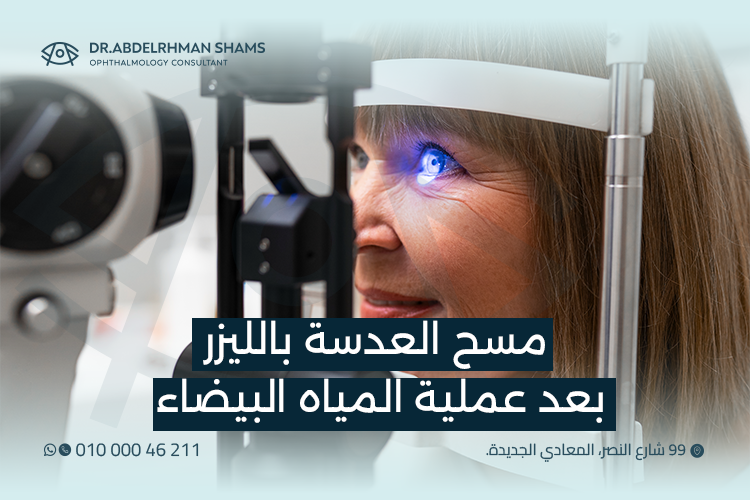
Are you experiencing cloudy, hazy, or blurred vision months or even years after what seemed to be a perfectly successful cataract surgery? You are certainly not alone. Many patients experience a gradual decline in visual clarity, often describing it as looking through a dirty or foggy window. This common condition is medically known as Posterior Capsule Opacification (PCO), or a "secondary cataract." Fortunately, you do not need to undergo another invasive surgery. The definitive, immediate, and virtually painless solution is a yag laser capsulotomy.
In this comprehensive guide, we will cut straight to the facts. Whether you are scheduled for the procedure next week or are simply researching your symptoms, we will cover everything from the exact medical definitions and procedural steps to the expected recovery, potential risks, and financial considerations.
What is the YAG Laser Capsulotomy Full Form?

Read more: Best Cataract Surgeon
To truly understand the treatment, it helps to break down the medical terminology. The YAG laser capsulotomy full form provides deep insight into the technology and anatomy involved:
YAG (Yttrium Aluminum Garnet): This refers to the specific type of synthetic crystal used to generate the laser beam. A YAG laser is a specialized, solid-state laser capable of producing high-energy, short pulses of light. It is incredibly precise, allowing it to pass harmlessly through the clear tissues of the front of the eye and only focus precisely on the targeted tissue in the back.
Laser: Light Amplification by Stimulated Emission of Radiation.
Capsulotomy: This word combines "Capsule" (the thin, clear membrane that holds your artificial intraocular lens in place) and "otomy" (a medical suffix meaning to make an incision or cut).
Put together, the procedure involves using a highly focused Yttrium Aluminum Garnet laser to create a precise opening in the cloudy posterior capsule, allowing light to pass clearly to your retina once again.
Common YAG Laser Capsulotomy Indications
It is important to note that not every person who has cataract surgery will develop PCO, and not everyone with mild PCO requires immediate treatment.
Ophthalmologists look for specific YAG laser capsulotomy indications before recommending the procedure:
- Significant Visual Impairment: The most common indication is when your vision declines to the point where it interferes with your daily activities. If reading small print, watching television, or recognizing faces becomes difficult again, intervention is necessary.
- Severe Glare and Halos: PCO often causes light to scatter as it enters the eye. This results in disabling glare, especially when looking at oncoming headlights during night driving, which poses a significant safety hazard.
- Failed Occupational Vision Tests: If the cloudiness prevents you from passing a DMV driver’s license vision test or an occupational visual screening, the procedure is medically indicated.
- Impaired Retinal Examinations: Sometimes, the posterior capsule becomes so opaque that your eye doctor cannot see through it to examine your retina. If you have underlying conditions like diabetic retinopathy or macular degeneration that require strict monitoring, the doctor must clear the capsule to view the back of your eye.
Step-by-Step: The YAG Laser Capsulotomy Procedure
Many patients experience anxiety before eye treatments, but understanding the YAG laser capsulotomy procedure can provide immense peace of mind. It is an outpatient procedure, meaning it is performed in the doctor's office or clinic, and does not require an operating room.
1. The Preparation Phase
Before the laser is used, your ophthalmologist will administer dilating eye drops to widen your pupil. This gives the doctor a clear, wide window to view the clouded capsule behind your artificial lens. You will also receive a mild anesthetic eye drop to numb the surface of your eye, ensuring you do not feel the physical touch of any instruments.
2. The Laser Application
You will be seated comfortably at a specialized slit-lamp machine (similar to the one used during your regular eye exams) equipped with the YAG laser.
You will be asked to place your chin on the rest and your forehead against the strap to keep your head completely still.
The doctor may place a special contact lens on your eye. This lens helps focus the laser beam precisely and prevents you from blinking.
The doctor will then aim the invisible laser at the clouded capsule. You will not feel any pain, but you will hear a series of faint "clicking" or "popping" sounds and see brief flashes of bright light.
The laser creates a perfectly circular opening in the center of the cloudy membrane.
The entire active laser phase takes less than five minutes. If you are feeling nervous, watching a reliable YAG laser capsulotomy video online before your appointment can be incredibly reassuring
as it perfectly illustrates how quick and non-invasive the process truly is.
Read more: Cataracts in the Elderly

Comparing Cataract Surgery and YAG Laser Capsulotomy
Patients often confuse PCO with the return of their cataracts. A cataract cannot grow back because the natural lens has been removed. The following table highlights the major
|
Feature |
Initial Cataract Surgery (Phacoemulsification) |
YAG Laser Capsulotomy |
|
Primary Goal |
Remove the cloudy natural lens and implant a clear artificial lens (IOL). |
Clear away the cloudy membrane (capsule) sitting behind the artificial lens. |
|
Invasiveness |
Micro-incisions are made in the eye. |
Completely non-invasive; no incisions required. |
|
Environment |
Sterile surgical operating room. |
Standard outpatient eye clinic. |
|
Duration |
15 to 30 minutes. |
2 to 5 minutes. |
|
Anesthesia |
Local anesthesia, sometimes with IV sedation. |
Topical numbing eye drops only. |
|
Recurrence |
Done once; cataracts do not grow back. |
Done once; the capsular opening is permanent. |
differences between your initial surgery and the laser follow-up:
Guidelines for YAG Laser Capsulotomy After Care
Because the procedure is non-invasive, the recovery period is remarkably fast and straightforward. Following a proper YAG laser capsulotomy after care routine ensures optimal healing and minimizes any potential irritation.
- Immediate Aftermath: Because your eyes will remain dilated for a few hours, your vision will be blurry, and you will be highly sensitive to light. You must have a friend or family member drive you home.
- Prescription Eye Drops: Your doctor will prescribe anti-inflammatory eye drops (often steroid drops) to be used for about one week. It is crucial to use these exactly as directed to prevent post-laser inflammation.
- Activity Restrictions: There are virtually no physical restrictions. You can resume normal activities, including bending, lifting, reading, and watching screens, by the very next day.
- Protection: Wear dark sunglasses when stepping outside for the first 24 to 48 hours to manage light sensitivity.
- Follow-up Appointment: You will typically need to return to the clinic within a week so the doctor can check your intraocular pressure and verify that the inflammation has subsided.
Understanding the Risks: Problems After YAG Laser Capsulotomy
While considered one of the safest procedures in ophthalmology—with a success rate exceeding 95%—it is still a medical intervention.
Being aware of the potential problems after YAG laser capsulotomy ensures you know when to contact your physician
- 1. Elevated Intraocular Pressure (IOP Spikes)
The most common complication is a temporary spike in eye pressure immediately following the procedure. The laser energy and the microscopic debris released into the eye can temporarily slow the eye's natural fluid drainage. Doctors typically check your pressure an hour after the procedure and may provide pressure-lowering drops as a precaution.
2. YAG Laser Capsulotomy Floaters
It is very common for patients to experience YAG laser capsulotomy floaters shortly after the treatment. When the laser breaks the cloudy capsule, microscopic fragments of the membrane float freely into the vitreous fluid of the eye. These appear as small black spots, cobwebs, or squiggly lines drifting across your field of vision. While they can be initially annoying, they are usually harmless. In most cases, these floaters settle at the bottom of the eye out of your line of sight, or your brain learns to ignore them over a few weeks.
3. Cystoid Macular Edema (CME)
In rare instances, the laser energy can cause inflammation that travels to the back of the eye, resulting in swelling of the macula (the central part of the retina). This condition, known as Cystoid Macular Edema, causes blurry central vision and is usually treated successfully with prolonged use of anti-inflammatory drops.
4. Retinal Detachment
This is the most severe, though extremely rare, complication. The shockwaves from the YAG laser can, in highly susceptible individuals (such as those with severe nearsightedness), cause the retina to pull away from the back of the eye. If you experience a sudden shower of new floaters, bright flashes of light like lightning streaks, or a dark shadow/curtain falling over your vision, seek emergency ophthalmic care immediately.
Evaluating the YAG Laser Capsulotomy Cost
Financial planning is a key part of your healthcare journey. The YAG laser capsulotomy cost can vary significantly based on several contributing factors:
Read more: Causes of Cataract in Young Age

Surgeon's Expertise: Highly experienced, board-certified ophthalmologists or specialized anterior segment surgeons may charge higher professional fees.
Geographic Location: Clinics in major metropolitan areas generally have higher overhead costs, which can reflect in the procedure's price compared to rural areas.
Technology and Facility: Outpatient surgical centers might include additional facility fees compared to procedures done directly in a standard examination chair.
Insurance Coverage: The good news is that because PCO impairs vision and affects daily life, YAG capsulotomy is almost universally classified as a medically necessary procedure. Therefore, Medicare and most private health insurance plans will cover the bulk of the cost. Patients are usually only responsible for their standard copayments or deductibles
Secure Your Vision with Expert Care
If your vision has become cloudy after cataract surgery, do not wait for it to impact your quality of life. Accurate diagnosis and precise laser treatment require an experienced specialist you can trust. abdelrhman shams provides comprehensive eye care solutions designed to restore your vision safely and effectively. To learn more about your options and schedule a specialized consultation, visit abdelrhmanshams.com today and take the first step toward clear, vibrant sight.
الاسئله الشائعة
Yes, floaters are very common shortly after treatment. When the laser breaks the cloudy capsule, microscopic fragments float into the eye's fluid, appearing as small black spots or cobwebs. These are usually harmless and will either settle at the bottom of the eye or your brain will naturally learn to ignore them over a few weeks.
Not at all. The posterior capsule does not have any pain receptors or nerve endings. Combined with the numbing eye drops used on the surface of your eye, the entire process is completely painless.
No. The opening created by the YAG laser in the posterior capsule is permanent. The membrane cannot grow back or close over the lens again, meaning you will only ever need this procedure once per eye.
احدث المقالات