استشاري جراحات المياه البيضاء وتصحيح الابصار وعلاج جفاف العيون
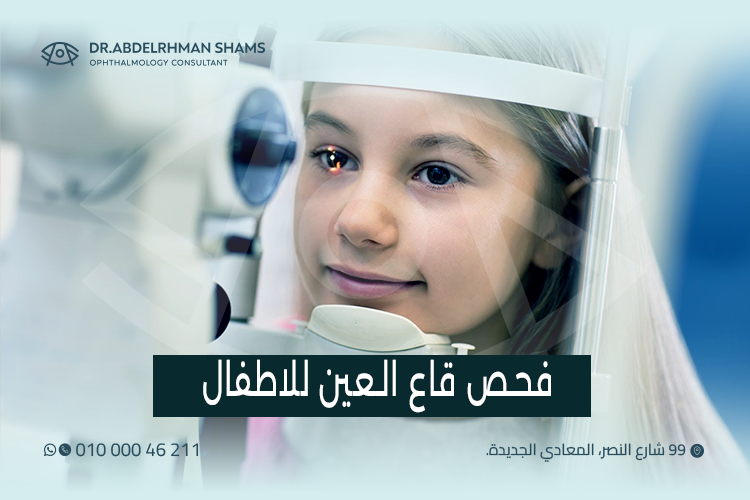
Has your doctor recommended a pediatric fundus examination for your young child, leaving you wondering about its nature and necessity? It is completely normal for parents to feel anxious when hearing about this procedure for the first time.
However, a child’s eyes undergo a highly sensitive developmental phase during their first months and years. Any defect affecting the retina or optic nerve during this critical window can permanently impair vision if not detected early. Thus, early screening acts as the first line of defense for your child’s visual health. In this comprehensive guide, we explain everything regarding this vital procedure, how it is performed, and the pathologies it can uncover before they progress.
Indications for a Pediatric Fundus Examination
The fundus is the posterior segment of the eye, housing the essential structures responsible for vision. This procedure allows the ophthalmologist to directly visualize this area to evaluate the integrity of its three main components:
- The Retina: Functions like a sensory receptor screen, capturing light and converting it into neural signals transmitted to the brain to form images.
- The Optic Nerve Head: The point where the optic nerve exits the eye and where the retinal blood vessels enter.
- The Blood Vessels: The vascular network that supplies essential nutrients and oxygen to the ocular tissues.
If any of these structures are compromised, overall vision is affected. This anatomical connection explains the relationship between the eye and the brain, as the retina and optic nerve serve as the vital transmission link.

Mayo Clinic Insights The Mayo Clinic and the World Medical Association emphasize the critical importance of a comprehensive pediatric fundus examination, especially for at-risk children. The organization reports that this detailed evaluation allows the ophthalmologist to clearly assess the posterior segment of the eye, which is crucial for the early detection of retinal and optic nerve disorders. This ensures prompt medical intervention and protects the child's vision from future complications.
Ophthalmologists typically order this screening to rule out vascular damage caused by systemic conditions, or to ensure normal ocular development. It is highly recommended in the following cases:
- Premature birth.
- Low birth weight (under 2 kg).
- Prolonged stay in the neonatal intensive care unit (NICU).
- Family history of congenital eye defects or vision problems.
Pathologies Detected via Screening
The clinical value of a pediatric fundus examination is particularly evident in premature infants, serving as the primary diagnostic tool for Retinopathy of Prematurity (ROP).
WebMD and global medical professionals highlight the necessity for premature infants to undergo a thorough eye evaluation before hospital discharge or immediately after going home. Reports on the WebMD platform confirm that early detection of abnormal retinal blood vessel development provides the ophthalmologist with a golden opportunity for prompt intervention, shielding the child from severe visual complications and ensuring normal visual maturation.
ROP occurs because the retinal blood vessels in premature babies are not yet fully developed. Consequently, their eyes require rigorous monitoring to ensure proper vascularization.
Optimal Timing for Screening

If your child falls into any of the aforementioned high-risk categories, their first pediatric fundus examination is usually scheduled between 4 and 6 weeks of age. The results are immediate, eliminating the anxiety of a long wait.
While routine home observation is helpful, specific clinical signs require an immediate visit to the ophthalmologist:
- Abnormal eye movements or unusual shaking (nystagmus).
- A family history of cataracts or retinal dystrophy.
- Suspected congenital ocular anomalies.
- Chronic pediatric conditions affecting the eyes (e.g., juvenile diabetes).
- Direct ocular trauma.
These signs are critical indicators. Therefore, a pediatric fundus examination is not merely a routine checkup, but a crucial preventive and therapeutic measure aimed at preserving visual acuity.
Management of Retinopathy of Prematurity (ROP)
If screening reveals ROP, the management protocol depends on the severity:
- Mild Cases: The doctor may recommend repeating the screening every two weeks until retinal vascularization is complete.
- Severe Cases: The child may require immediate laser therapy to prevent the severe complication of retinal detachment.
Strict adherence to follow-up appointments is mandatory to track disease progression effectively.
Clinical Expertise in Complex Cases
Evaluating children with disabilities or special needs demands exceptional clinical acumen. These children may not be able to articulate their visual disturbances, making an objective assessment vital.
Dr. Abdelrahman Shams is deeply committed to evaluating complex pediatric cases and participating in influential community healthcare initiatives. In a recent clinical engagement, Dr. Shams served on a specialized medical committee at Ain Shams University Hospitals to evaluate a child with complex disabilities.
As documented in the medical coverage by Al-Gomhuria Newspaper, the child underwent a meticulous assessment of the retina and optic nerve to ensure the integrity of her visual functions and to formulate a highly customized treatment plan. This involvement reflects the clinic's dedication to providing elite tertiary eye care for cases requiring expert precision.

Clinical Procedure of a Pediatric Fundus Examination
While it may sound complex, the clinical steps are highly streamlined:
- Pupillary Dilation: The ophthalmologist administers specialized mydriatic drops to dilate the pupil, providing a wider window to visualize the intraocular structures.
- Ophthalmoscopy: Using specialized optical instruments with targeted illumination, the doctor directly examines the retina, vascular network, and optic nerve.
- Comprehensive Assessment: The specialist meticulously inspects the tissues for hemorrhages, blockages, or pathological changes indicating underlying ocular diseases.
Through this systematic approach, a pediatric fundus examination successfully identifies early-stage retinal diseases, infections, and refractive anomalies, allowing for proactive management. Importantly, this procedure is completely safe and painless.
Examinations Under Anesthesia (EUA)
In certain clinical scenarios, performing a pediatric fundus examination under general anesthesia is the safest and most effective option. Indications include:
- Uncooperative infants requiring precise, detailed clinical evaluation.
- Suspected congenital cataracts, requiring high-resolution visualization of the lens.
- Suspected congenital glaucoma, which necessitates highly accurate intraocular pressure (IOP) measurements that are impossible to obtain in a moving child.
- Complex strabismus cases requiring comprehensive extraocular muscle assessment.
Book Your Consultation
Do not delay your child's eye care if advised by a physician or if you notice concerning symptoms. Early intervention makes a profound difference. For expert care, Dr.abdelrhman shams Eye Clinic provides specialized pediatric ophthalmology services in a safe, calming environment, complete with detailed diagnostic explanations Best Cataract Surgeon .
To inquire about the dilated eye exam cost of a pediatric fundus examination in Egypt, or to schedule an appointment, please visit our clinic’s website today. Our medical team is ready to assist you as soon as possible.
احدث المقالات