استشاري جراحات المياه البيضاء وتصحيح الابصار وعلاج جفاف العيون

Finding the best Pediatric Ophthalmologist specializing in children's strabismus is of utmost importance to parents when they notice that their child is suffering from any degree of eye deviation. Strabismus is a prevalent clinical condition among children where one or both eyes deviate from normal alignment. If left untreated, it can lead to severe complications, including amblyopia (lazy eye) and impaired binocular vision.
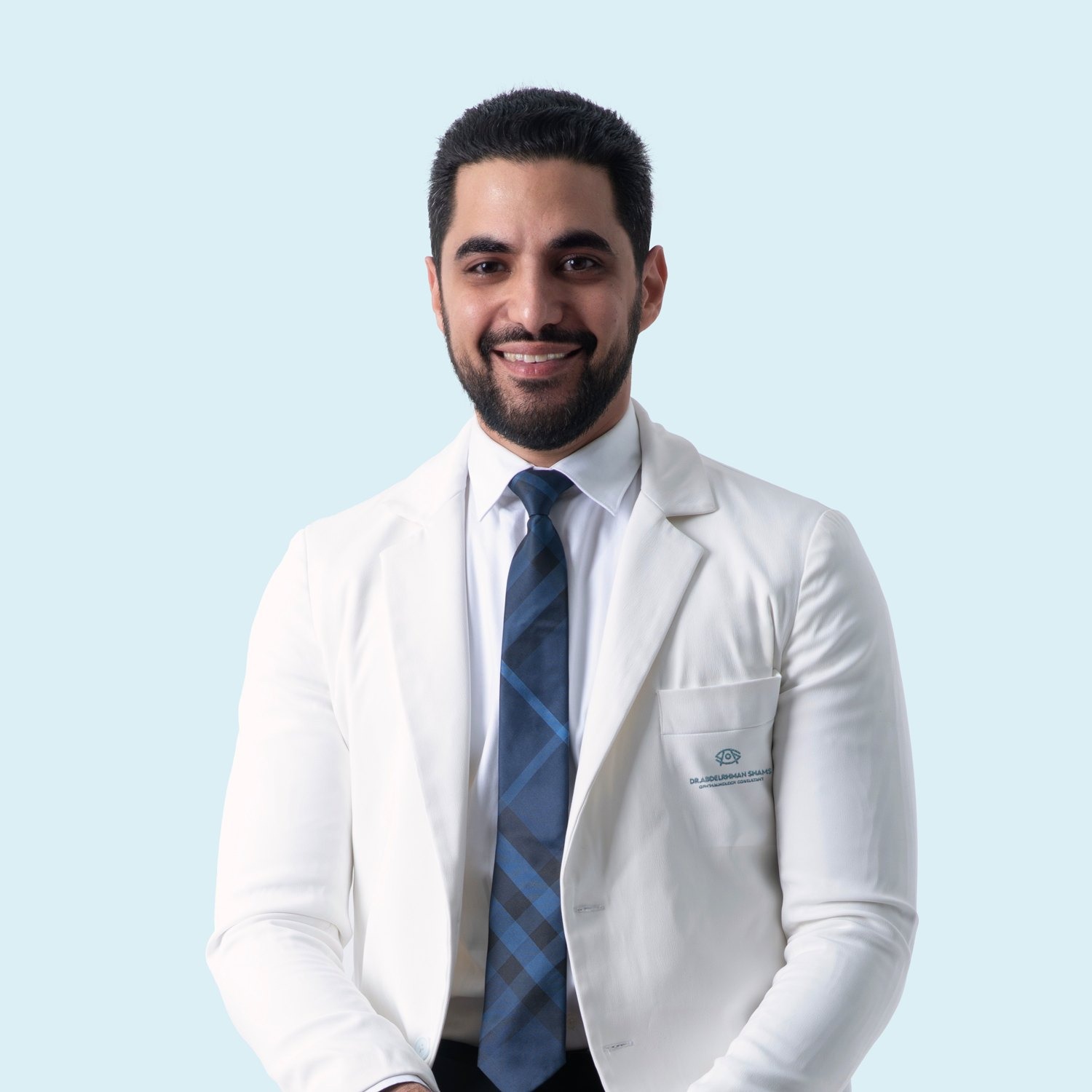
Dr. Abdel Rahman Shams is considered a highly distinguished Pediatric Ophthalmologist in Egypt, possessing extensive clinical and surgical experience in the field of ophthalmic surgery. Through precise surgical interventions, he has contributed to restoring healthy ocular alignment and vision for numerous patients.
Clinical Overview of Ocular Misalignment (Crossed Eyes)
One of the most frequently diagnosed visual disorders is strabismus, commonly referred to as crossed eyes or a squint. This medical term denotes the deviation of the eye from its physiological focal position. While strabismus is predominantly diagnosed in childhood, it can also manifest in adults. At any age, this anatomical anomaly can be surgically corrected by a specialized Pediatric Ophthalmologist through strabismus surgery.
The primary objective of strabismus surgery is to recalibrate the extraocular muscles responsible for ocular motility. This surgical intervention is typically recommended after conservative treatments—such as corrective lenses, occlusion therapy, and eye muscle injections—have proven insufficient.

Pre-Operative Assessment and Surgical Preparation
Proper clinical evaluation is essential before proceeding with surgical intervention. The preparation involves several steps:
- Comprehensive Clinical Evaluation: The case is meticulously assessed by the Pediatric Best Ophthalmologist to confirm an accurate diagnosis and formulate a tailored treatment protocol.
- Medical Clearance: Ensuring the patient is physically fit to undergo general anesthesia.
- Patient Counseling: Providing parents and patients the opportunity to discuss the procedure and address any clinical inquiries.
- Pre-Surgical Guidelines: Issuing specific fasting instructions regarding food and fluid intake prior to the operation.
Surgical Techniques in Strabismus Correction
Strabismus surgery involves surgically adjusting the alignment of the eyes by altering the tension of the extraocular muscles or tendons. The procedure generally lasts between 30 minutes and two hours, following a precise protocol:
- The patient is placed under general anesthesia.
- The surgeon uses a specialized speculum to keep the eyelids open, often operating on both eyes to achieve optimal binocular alignment.
- The Pediatric Ophthalmologist carefully detaches a section of the targeted eye muscle, then repositions and secures it to a new anatomical site to restore proper alignment.
- The adjusted muscles are anchored using dissolvable sutures.
- In certain clinical scenarios, minor post-operative adjustments may be required to perfect the alignment.

In this context, the globally renowned Mayo Clinic emphasizes that strabismus (crossed eyes) is a condition in which the eyes do not properly align with each other when looking at an object. According to their medical guidelines, early diagnosis and proper clinical evaluation are highly crucial to prevent long-term vision complications, such as amblyopia (lazy eye). This aligns with the comprehensive diagnostic approach, which prioritizes understanding the underlying cause before deciding on the most appropriate corrective therapy.
Etiology and Pathogenesis of Strabismus in Children
Anatomically, human eyes are surrounded by six extraocular muscles that must work in perfect synchrony to focus on a single visual target. The central nervous system regulates this complex motor function. Any neurological or muscular dysfunction can precipitate strabismus.
Consulting a knowledgeable Pediatric Ophthalmologist is critical for an accurate etiological diagnosis. Strabismus often develops as the visual system attempts to compensate for underlying refractive errors, such as:
- Myopia (Nearsightedness): Clear near vision but blurred distance vision.
- Hyperopia (Farsightedness): Difficulty focusing on near objects while distant objects remain clear.
- Astigmatism: An irregular corneal curvature causing light to focus unevenly on the retina.
Furthermore, while often an isolated condition, strabismus can be associated with systemic or neurological factors, including:
- Post-infectious complications (e.g., measles).
- Genetic anomalies such as Down syndrome.
- Developmental delays or cerebral palsy.
- Neurological deficits affecting cranial nerves.
- Hydrocephalus and prematurity.
Strabismus in Infants: Clinical Perspectives
Primary Causes of Infantile Strabismus
While the exact etiology can sometimes remain elusive, several pathological conditions contribute to infant strabismus:
- Idiopathic Strabismus: The most common form, occurring without a distinctly identifiable underlying pathology.
- Extraocular Muscle Dysfunction: A lack of neuromuscular coordination, causing abnormal eye movements.
- Cranial Nerve Palsy: Damage or dysfunction in the three cranial nerves responsible for innervating the eye muscles.
- Central Nervous System Disorders: Malfunctions in the brain's control centers governing ocular motility.
- Thyroid Eye Disease: An autoimmune inflammatory condition affecting orbital soft tissues.

In this context, WebMD —a leading global medical resource—highlights that strabismus involves a misalignment where the eyes point in different directions, often resulting from neuromuscular irregularities. The medical platform emphasizes that early medical intervention is critical; if conservative therapies are insufficient, surgical correction becomes a standard, highly effective, and safe approach to prevent permanent vision impairment, such as amblyopia, and to restore optimal binocular alignment.
Adult Strabismus: Pathophysiology and Symptoms
Adult-onset strabismus usually stems from muscle paresis, genetic predispositions, vascular events, or thyroid disorders. Sudden ocular deviation requires immediate evaluation by a Pediatric Ophthalmologist or an adult strabismus specialist to rule out acute neurological events.
Symptoms in adults frequently include:
Selecting the Premier Eye Specialist in Cairo
Children are susceptible to various congenital and acquired ocular pathologies that can significantly impact their quality of life and psychological well-being. Because children often struggle to articulate their visual disturbances, prompt diagnosis is vital. Therefore, parents must prioritize regular screenings with a qualified Pediatric Ophthalmologist in Heliopolis or Cairo.
When seeking the best ophthalmic care, Dr. abdelrhman shams stands out as an exemplary choice. As an elite Pediatric Ophthalmologist, he possesses the advanced scientific knowledge and clinical proficiency necessary to deliver the highest standard of pediatric eye care, ensuring a lifetime of healthy vision for his young patients.
احدث المقالات